Fertility and Functional Health: Because Your Ovaries Deserve More Than “ You need to calm down "
Trying to get pregnant can be beautiful, exciting, emotional, confusing, and occasionally make you want to throw your ovulation app into the nearest body of water.
One minute you are casually thinking, “Maybe we’ll start trying.”
The next minute you are tracking cervical mucus, peeing on ovulation sticks, Googling “implantation cramps or gas,” and staring at a pregnancy test under three different types of lighting like you are trying to decode ancient scripture.
If this is you, first: you are not dramatic.
You are human.
Fertility can feel deeply personal because it is deeply personal. It touches your body, your relationship, your identity, your hopes, your timeline, your hormones, your patience, and sometimes your Amazon cart because suddenly you own 47 supplements and a thermometer that knows more about your cycle than your husband does.
But here is the good news: fertility is not only about your ovaries.
It is about the whole body.
That is where functional health can be incredibly helpful.
Fertility is not just a reproductive issue
We often talk about fertility as if it lives only in the uterus and ovaries.
Egg meets sperm. Baby happens. Simple.
Except the body did not get that memo.
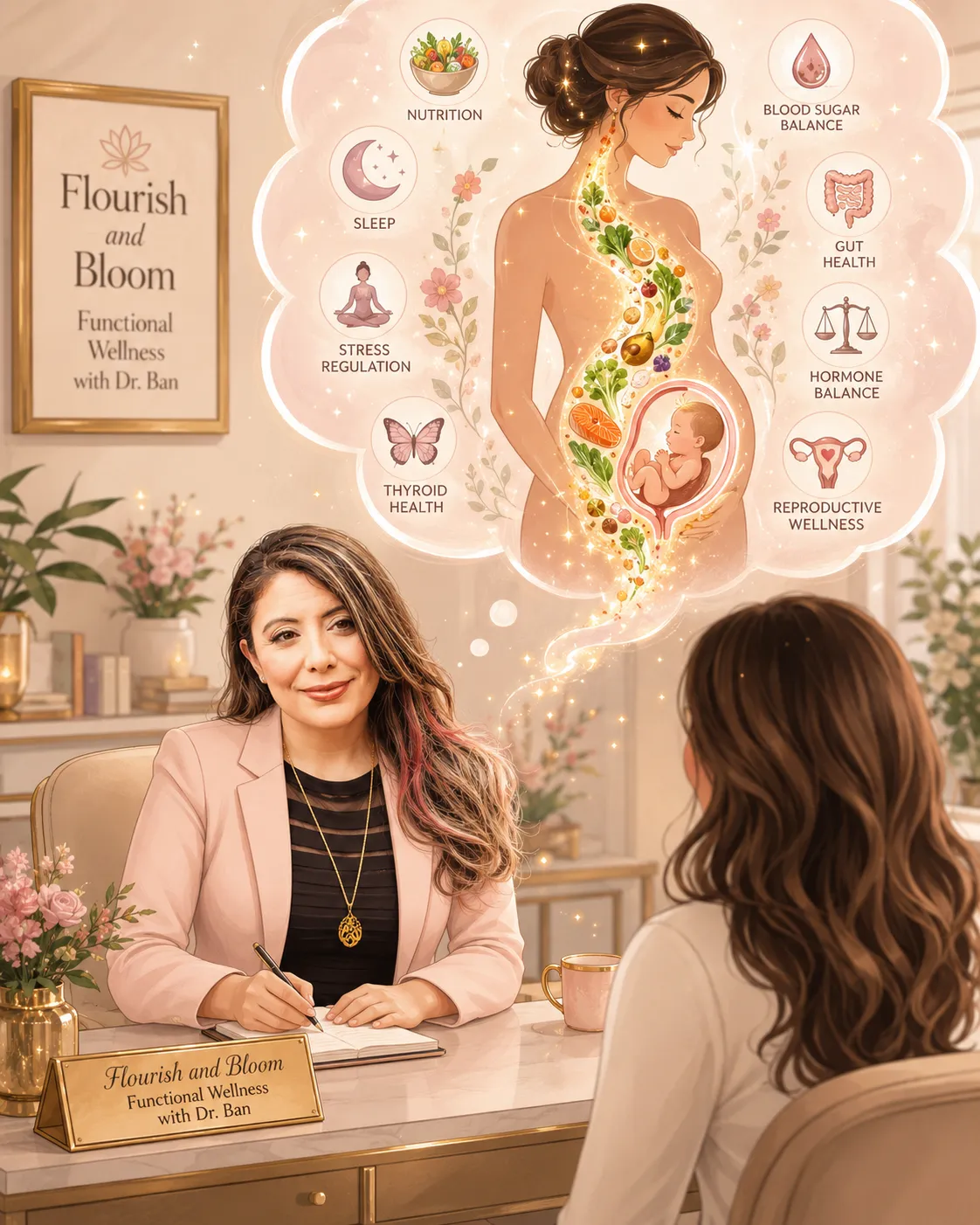
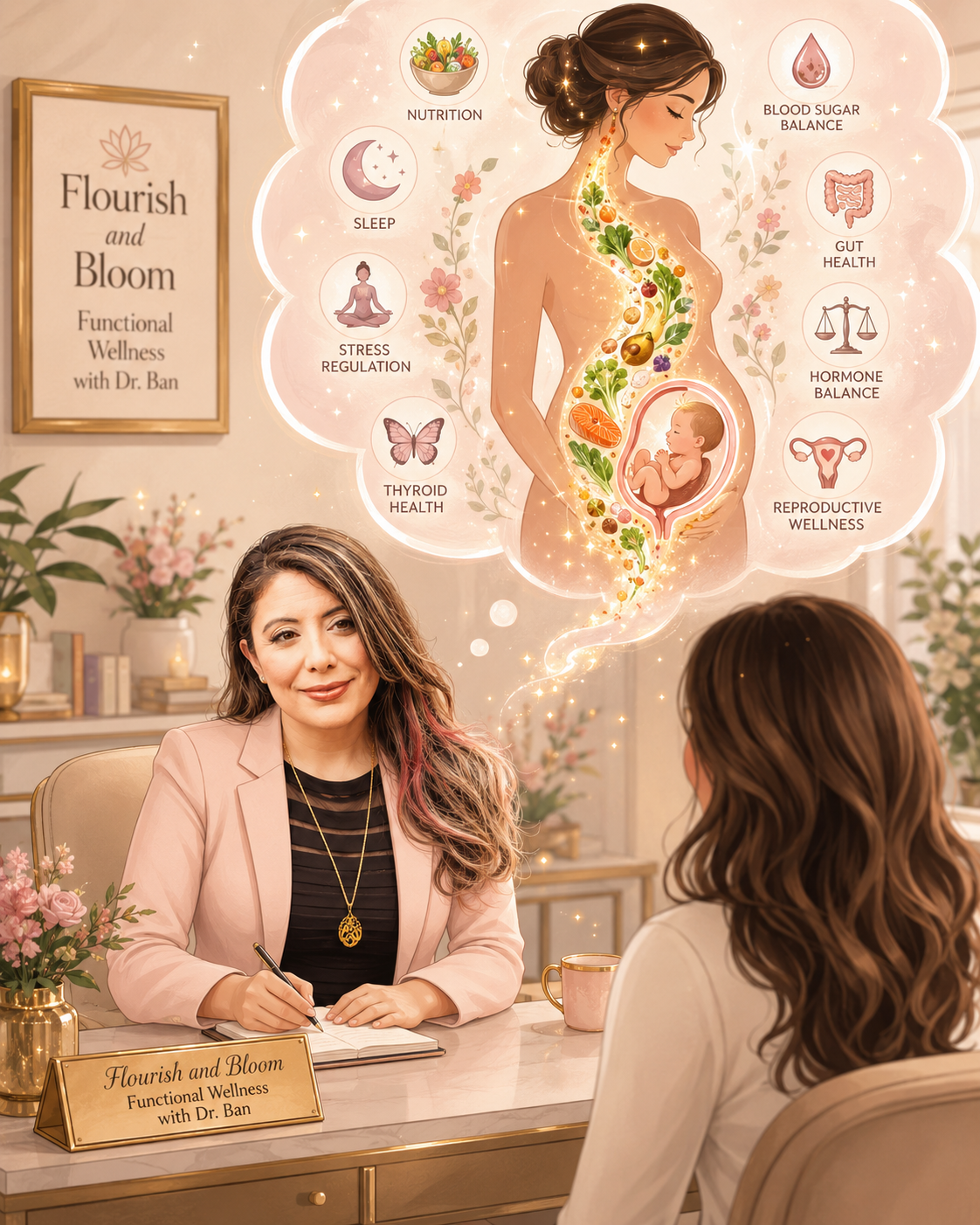
Ovulation depends on a beautifully coordinated conversation between the brain, ovaries, thyroid, adrenal system, metabolism, immune system, gut, liver, and reproductive hormones.
Basically, your body is running a group chat.
And if one person in the group chat starts acting chaotic, the whole conversation can get confusing.
Your brain sends hormonal signals to the ovaries.
Your ovaries make estrogen and progesterone.
Your thyroid helps regulate metabolism, energy, and cycle function.
Your insulin and blood sugar influence ovulation and hormone balance.
Your gut and liver help process hormones and nutrients.
Your immune system helps maintain a healthy inflammatory balance.
Your stress system can influence ovulation and cycle regularity.
So when we support fertility through functional health, we are not just asking, “Are your ovaries working?”
We are asking, “Is your body feeling safe, nourished, regulated, and metabolically supported enough to ovulate, conceive, and sustain a healthy pregnancy?”
Much better question.
Functional health does not replace fertility medicine
Let’s be very clear before someone’s cousin’s wellness coach enters the chat.
Functional health does not replace a fertility evaluation.
It does not replace semen analysis.
It does not replace checking tubes when needed.
It does not replace evaluating ovulation.
It does not replace reproductive endocrinology when it is time.
And it definitely does not replace medical care with “just drink celery juice and manifest twins.”
No.
Functional health is not here to shame you out of science. It is here to support the biology that science already respects.
The best fertility care often combines both: appropriate medical evaluation plus a deeper look at the terrain of the body.
Because sometimes the issue is blocked tubes, severe male factor, diminished ovarian reserve, endometriosis, or age-related egg quality.
And sometimes the issue is irregular ovulation, insulin resistance, thyroid dysfunction, nutrient depletion, inflammation, poor sleep, chronic stress, under-fueling, over-exercising, or blood sugar chaos.
Sometimes it is both.
Fertility is rarely a one-tab browser situation. It is more like having 18 tabs open, one is playing music, and nobody knows which one.
When should you get evaluated?
If you are under 35 and have been trying for 12 months without pregnancy, it is time for an evaluation.
If you are 35 or older, do not wait a year. Evaluation is generally recommended after 6 months of trying.
If you are over 40, have irregular periods, known endometriosis, a history of pelvic infections, recurrent miscarriages, PCOS, prior ovarian surgery, or a partner with possible sperm concerns, it is reasonable to seek help sooner.
This is not because your body is “failing.”
It is because time matters in fertility, and information is power.
Getting answers early does not mean you are signing up for IVF tomorrow. It means you are refusing to guess in the dark.
What does functional health look at for fertility?
Functional health asks deeper questions.
Not weird questions. Useful questions.
Are you ovulating regularly?
Are your cycles predictable?
Is your luteal phase long enough?
Are you making enough progesterone after ovulation?
Is your thyroid optimized for conception?
Are you insulin resistant?
Is inflammation affecting hormone signaling?
Are you getting enough protein, iron, omega-3s, choline, folate, vitamin D, iodine, zinc, selenium, and magnesium?
Are you sleeping like a human or like a raccoon with responsibilities?
Is stress disrupting your nervous system?
Is your gut absorbing nutrients well?
Is your liver efficiently metabolizing hormones?
Are you under-eating and calling it “being healthy”?
Are you over-exercising and wondering why your period has left the group chat?
Are environmental exposures adding to your hormone burden?
This is the work.
Not because every woman needs 900 labs and a pantry full of powders.
But because fertility is a whole-body function.
Ovulation: the main character
You cannot get pregnant naturally if you are not ovulating.
This sounds obvious, but many women are told their cycles are “fine” because they bleed every month.
A period does not always mean ovulation happened.
Bleeding is not always proof that an egg was released. Your uterus can send a monthly invoice even if the ovaries did not complete the assignment.
Signs that ovulation may be irregular include:
Cycles shorter than 21 days or longer than 35 days
Very unpredictable cycles
Spotting before the period
Very light or very heavy periods
Known PCOS
Acne, excess facial hair, or hair thinning
Low progesterone symptoms
No clear ovulation signs
Functional health helps by asking why ovulation may be struggling.
Is it insulin resistance?
Thyroid dysfunction?
High stress load?
Under-fueling?
Excessive exercise?
Inflammation?
PCOS?
Perimenopause?
Elevated prolactin?
Low body weight?
The goal is not just to force ovulation. The goal is to understand the environment ovulation is living in.
Because ovaries are sensitive. They are basically tiny hormonal divas, and honestly, they have reasons.
Blood sugar and insulin: the fertility plot twist
Blood sugar matters for fertility.
Insulin is not just a diabetes hormone. It also talks to the ovaries.
When insulin levels are high or the body becomes insulin resistant, the ovaries may produce more androgens, ovulation can become irregular, and conditions like PCOS can become more symptomatic.
This is one reason women with PCOS often benefit from nutrition, movement, strength training, better sleep, and sometimes targeted medical support.
Blood sugar chaos can also affect energy, cravings, inflammation, sleep, mood, and weight regulation.
And no, this does not mean you can never eat bread again.
Please do not let fertility content turn your kitchen into a punishment center.
It means your meals should support stable blood sugar.
A fertility-supportive plate often includes protein, fiber-rich carbohydrates, healthy fats, and color from plants.
Think eggs with avocado and berries.
Greek yogurt with nuts and chia.
Salmon with roasted vegetables and quinoa.
Lentil soup with olive oil and greens.
A balanced plate says, “We are nourishing a future pregnancy.”
A sad rice cake eaten while standing at the counter says, “Someone on the internet scared me.”
Thyroid health: small gland, big fertility energy
Your thyroid is tiny but powerful.
Thyroid hormones influence ovulation, menstrual regularity, metabolism, energy, mood, and early pregnancy development.
Both overt thyroid disease and suboptimal thyroid function can matter when trying to conceive.
A functional approach often looks at more than just “normal or abnormal.” It asks whether thyroid function is optimized for pregnancy, whether antibodies are present, whether nutrients like iodine, selenium, iron, zinc, and vitamin D are adequate, and whether symptoms match the labs.
This is especially important for women with fatigue, hair shedding, cold intolerance, constipation, heavy periods, irregular cycles, miscarriage history, or a family history of thyroid disease.
The thyroid is not dramatic.
It just likes attention.
Inflammation and immune balance
Inflammation is part of normal biology. You need it to heal and defend yourself.
But chronic inflammation can interfere with hormone signaling, metabolic health, egg quality, implantation, and overall reproductive function.
Common drivers may include poor sleep, insulin resistance, inflammatory diets, gut issues, autoimmune disease, chronic stress, obesity, smoking, excessive alcohol, untreated infections, environmental exposures, or conditions like endometriosis.
Functional health does not claim inflammation is the answer to everything.
That would be suspiciously convenient.
But it does ask whether the body is carrying unnecessary inflammatory burden and how we can reduce it.
This may include an anti-inflammatory food pattern, omega-3-rich foods, adequate fiber, movement, sleep repair, gut support, stress regulation, and targeted treatment when there is a clear diagnosis.
Nutrition: fertility is not the time for “barely eating”
Trying to conceive is not the time to under-nourish.
Your body needs raw materials to make hormones, ovulate, build a uterine lining, support egg development, and prepare for pregnancy.
Important nutrients for fertility and preconception health include folate, iron, vitamin D, omega-3 fatty acids, iodine, choline, zinc, selenium, magnesium, B vitamins, and adequate protein.
A prenatal vitamin can help, but it is not a permission slip to eat like a tired squirrel.
Food still matters.
A Mediterranean-style pattern is often a beautiful foundation: vegetables, fruits, beans, lentils, whole grains, nuts, seeds, olive oil, fish, eggs, and quality proteins.
Not perfect eating.
Not joyless eating.
Not “I brought my own steamed broccoli to your birthday dinner” eating.
Just consistent nourishment.
Your future baby does not need you to be perfect.
Your body needs you to stop treating meals like an optional side quest.
Stress: no, “just relax” is not a fertility plan
Few things are more annoying than being told to relax when you are trying to conceive.
“Just relax and it will happen” is not medical advice. It is something people say when they do not know what else to say.
Stress alone does not explain all infertility. Please do not blame yourself.
However, chronic stress can affect sleep, inflammation, blood sugar, libido, digestion, thyroid function, and sometimes ovulation. Stress may not be the whole story, but it can be part of the story.
Functional health approaches stress in a practical way.
Not “quit your job and move to a lavender farm.”
More like:
Can we improve sleep?
Can we reduce nervous system overload?
Can we support boundaries?
Can we add gentle movement?
Can we address anxiety around tracking?
Can we stop turning intercourse into a scheduled corporate meeting with candles?
Trying to conceive can become very mechanical.
Sometimes intimacy starts to feel like, “Hello, partner. According to my app, your services are required between 7:00 and 9:00 p.m.”
Romantic? Not exactly.
Common? Very.
You are allowed to laugh. You are also allowed to need support.
Gut health and hormone metabolism
Your gut helps absorb the nutrients needed for hormone production and pregnancy.
It also plays a role in estrogen metabolism, inflammation, immune function, and blood sugar regulation.
Gut symptoms like bloating, constipation, diarrhea, reflux, food intolerances, or chronic digestive discomfort may be worth addressing before pregnancy.
Regular bowel movements matter too. Constipation can affect how hormones are processed and eliminated.
Yes, we are talking about poop in a fertility blog.
Medicine is glamorous.
Functional gut support may include fiber, hydration, magnesium when appropriate, fermented foods if tolerated, addressing constipation, evaluating food triggers, and investigating persistent symptoms rather than ignoring them for the next 14 years.
Male fertility matters too
This is your friendly reminder that sperm are half the equation.
Half.
Not a decorative accessory.
Male factor contributes to a significant portion of infertility, and semen analysis is simple compared with many female fertility evaluations.
Functional health for male fertility may include addressing smoking, alcohol, cannabis, heat exposure, sleep, obesity, metabolic health, varicoceles, medications, toxin exposure, and nutrient status.
So if you are doing seed cycling, acupuncture, supplements, sleep optimization, and emotional gymnastics while your partner is taking hot baths with a laptop on his lap, we need a team meeting.
Fertility is not a solo sport.
Egg quality: what we can and cannot control
Egg quality is heavily influenced by age. That part is real.
No supplement, detox, tea, or “fertility goddess protocol” can fully override biology.
But that does not mean nothing matters.
Eggs develop in the ovarian environment over several months. During that time, metabolic health, oxidative stress, inflammation, nutrient status, sleep, smoking, alcohol, and certain environmental exposures may influence the reproductive environment.
Functional health can support the terrain.
It cannot guarantee an outcome.
This is important because hope should be honest.
We can support your body beautifully and still respect biology.
Both can be true.
Functional fertility testing: what might be considered?
Depending on the person, a fertility-focused functional evaluation may include:
Cycle history and ovulation tracking
Thyroid labs
Vitamin D
Iron and ferritin
B12 and folate status
Metabolic markers such as fasting insulin, glucose, and A1c
Inflammation markers when appropriate
Androgen levels if PCOS symptoms are present
Progesterone timed correctly after ovulation
Prolactin when cycles are irregular
AMH when ovarian reserve information is needed
Preconception labs and immunization review
Semen analysis for the male partner
This does not mean every person needs every test.
A good clinician does not order labs like they are decorating a Christmas tree.
Testing should answer a question.
Supplements: helpful, but not fairy dust
Supplements can support fertility, but they should be targeted.
A high-quality prenatal is often a good foundation before conception. Depending on the person, other nutrients such as vitamin D, omega-3s, CoQ10, magnesium, inositol for PCOS, choline, iron, or B12 may be considered.
But more is not always better.
Some supplements are not safe in pregnancy. Some interact with medications. Some are expensive glitter with a label.
Please do not build your fertility plan entirely from TikTok and panic.
Use supplements strategically, ideally with guidance.
Functional health and assisted reproduction
Functional health can also support women going through fertility treatments like ovulation induction, IUI, or IVF.
This is not an either-or decision.
You can work with a reproductive endocrinologist and also optimize nutrition, blood sugar, sleep, inflammation, thyroid function, gut health, stress resilience, and environmental exposures.
That is not “alternative.”
That is comprehensive.
IVF can help with eggs, sperm, fertilization, and embryos.
Functional health helps support the person going through the process.
And the person matters.
What does a functional fertility plan actually look like?
A thoughtful plan may include:
Clarifying your timeline and when to seek fertility evaluation
Understanding your cycle and confirming ovulation
Optimizing thyroid and metabolic health
Supporting blood sugar balance
Improving nutrient status
Building a realistic fertility nutrition plan
Addressing sleep and stress physiology
Reviewing medications and supplements
Reducing alcohol, nicotine, and avoidable toxin exposures
Supporting gut health and bowel regularity
Evaluating male factor early
Coordinating with fertility specialists when needed
This is not about making your life a full-time wellness project.
It is about removing obstacles and giving your body better conditions for conception.
How I support women who are trying to conceive
If you are trying to get pregnant and feel like you have been handed scattered pieces of advice from ten different directions, you are not alone.
One person says, “Track ovulation.”
Another says, “Stop stressing.”
Someone online says, “Take this supplement.”
Your app says, “Fertile window starts tomorrow.”
Your body says, “Actually, I have decided to be mysterious.”
This is exactly where a structured functional health approach can help.
In my practice, I offer different levels of support depending on where you are in your fertility journey.
The monthly self-paced foundational program
My monthly self-paced foundational program is designed for women who want education, structure, and practical tools they can start using right away.
This is a great option if you want to better understand your cycle, hormones, nutrition, metabolic health, inflammation, stress, sleep, and the lifestyle foundations that support fertility.
Inside the program, we focus on the basics that are not actually basic at all: blood sugar balance, nutrient sufficiency, hormone-supportive meals, sleep rhythms, stress physiology, gut health, movement, and preconception preparation.
Because before we chase every advanced fertility strategy, we need to make sure the foundation is not held together by caffeine, anxiety, and a prenatal vitamin you forget to take three times a week.
The goal is not perfection. The goal is education, consistency, and helping your body feel more supported.
One-on-one personalized fertility support
For women who need a deeper, more individualized plan, I also offer one-on-one support.
This is where we look more closely at your story: your cycle pattern, symptoms, medical history, labs, lifestyle, nutrition, stress load, sleep, gut health, metabolic health, prior pregnancies or losses, fertility timeline, and any known diagnoses such as PCOS, thyroid disease, endometriosis, irregular ovulation, or insulin resistance.
A one-on-one plan is especially helpful if you feel like something is “off,” but you have been told everything is “normal.”
Normal is not always the same as optimal.
In personalized support, we can identify patterns, prioritize the right next steps, and create a plan that fits your real life. Not a fantasy life where you sleep nine hours, meditate twice a day, cook every meal from scratch, and never get stressed because apparently you live inside a wellness brochure.
Real fertility support has to work for real women.
Functional testing that may help with fertility evaluation
Functional testing can help us understand the terrain of the body. It does not replace a fertility workup, and it does not replace appropriate evaluation with an OB-GYN or reproductive endocrinologist when needed. But it can give us useful information about factors that may affect ovulation, hormone balance, egg quality, implantation, and pregnancy preparation.
Depending on your history, testing may include:
Thyroid testing, including TSH, free T4, free T3, and thyroid antibodies when appropriate. Thyroid function matters for ovulation, cycle regularity, pregnancy maintenance, and early fetal development.
Metabolic testing, including fasting glucose, fasting insulin, hemoglobin A1c, and sometimes cholesterol markers. This can help identify insulin resistance or blood sugar dysregulation, which can affect ovulation and is especially important in PCOS.
Nutrient testing, such as vitamin D, ferritin and iron stores, B12, folate, and sometimes omega-3 status. Fertility and pregnancy require adequate nutritional reserves, not just “technically alive” levels.
Hormone evaluation, including estrogen, progesterone timed correctly after ovulation, LH, FSH, AMH when appropriate, prolactin, and androgens such as testosterone and DHEA-S if PCOS or androgen symptoms are suspected.
Inflammation markers, when clinically useful, such as hs-CRP or other targeted markers depending on symptoms and history.
Gut health evaluation, when there are symptoms such as bloating, constipation, diarrhea, reflux, food sensitivities, or suspected malabsorption. Gut health can affect nutrient absorption, inflammation, estrogen metabolism, and immune balance.
Adrenal and stress physiology evaluation, when symptoms suggest chronic stress burden, sleep disruption, fatigue, or nervous system dysregulation. This is not about blaming stress for infertility. It is about understanding how the body is adapting.
Toxin and environmental exposure assessment, when relevant, because endocrine-disrupting chemicals may affect hormonal signaling. This does not mean living in fear of every receipt, candle, or plastic container. It means reducing avoidable exposures in a realistic way.
And very importantly, fertility evaluation should also include the partner when applicable. Semen analysis is simple, important, and often overlooked. Sperm are half the equation, and they do not get to sit quietly in the background while women do all the testing, tracking, supplement-taking, and emotional labor.
Functional testing is not about ordering every test under the sun.
It is about asking better questions.
Why is ovulation irregular?
Is insulin resistance part of the picture?
Is thyroid function optimized?
Are nutrient stores adequate?
Is inflammation affecting the body’s reproductive environment?
Is the gut absorbing what the body needs?
Is the stress system overactivated?
Are we missing male factor?
The goal is clarity.
Because when you understand the root patterns, you can stop guessing and start building a plan.
The bottom line
Functional health can help with fertility because fertility is not isolated from the rest of the body.
Ovulation, egg quality, implantation, hormone balance, thyroid function, insulin sensitivity, inflammation, nutrient status, sleep, stress, gut health, and sperm quality all matter.
But functional health should be grounded, not magical.
It should support medical fertility care, not delay it.
It should give women more clarity, not more guilt.
If you are trying to conceive, you deserve more than “just relax.”
You deserve a plan.
A plan that looks at your hormones, your cycle, your metabolism, your nutrition, your stress load, your partner’s fertility, your timeline, and your whole life.
Because making a baby may involve one egg and one sperm.
But preparing the body for pregnancy?
That is a whole-body conversation.
Want a more personalized plan?
Inside my program, we take the confusion out of perimenopause, menopause, hormones, metabolism, inflammation, lifestyle, and long-term prevention. We do not do fear-based medicine. We do not do one-size-fits-all advice. And we definitely do not tell women to just “drink more water and accept suffering as a personality trait.”
You deserve a plan that looks at the whole picture: your symptoms, your labs, your history, your family history, your goals, and your quality of life.
If you are ready for deeper support, you can:
Join my online program for step-by-step education and guidance.
Book a discovery call so we can see whether working together is the right fit.
Join my free community for women’s health education, hormone support, and practical lifestyle guidance.
Follow me on Facebook, Instagram, and YouTube for more honest, science-backed conversations about hormones, menopause, functional medicine, and women’s health.
Because you do not need more panic.
You need clarity, strategy, and a clinician who can help you understand your body without making you feel like your hormones came with a warning label and a fog machine.