HRT, Breast Cancer Risk, and Family History: Let’s Calm the Drama and Read the Fine Print
There are few phrases that can make a woman’s nervous system sit up straighter than: “You have a family history of breast cancer.”
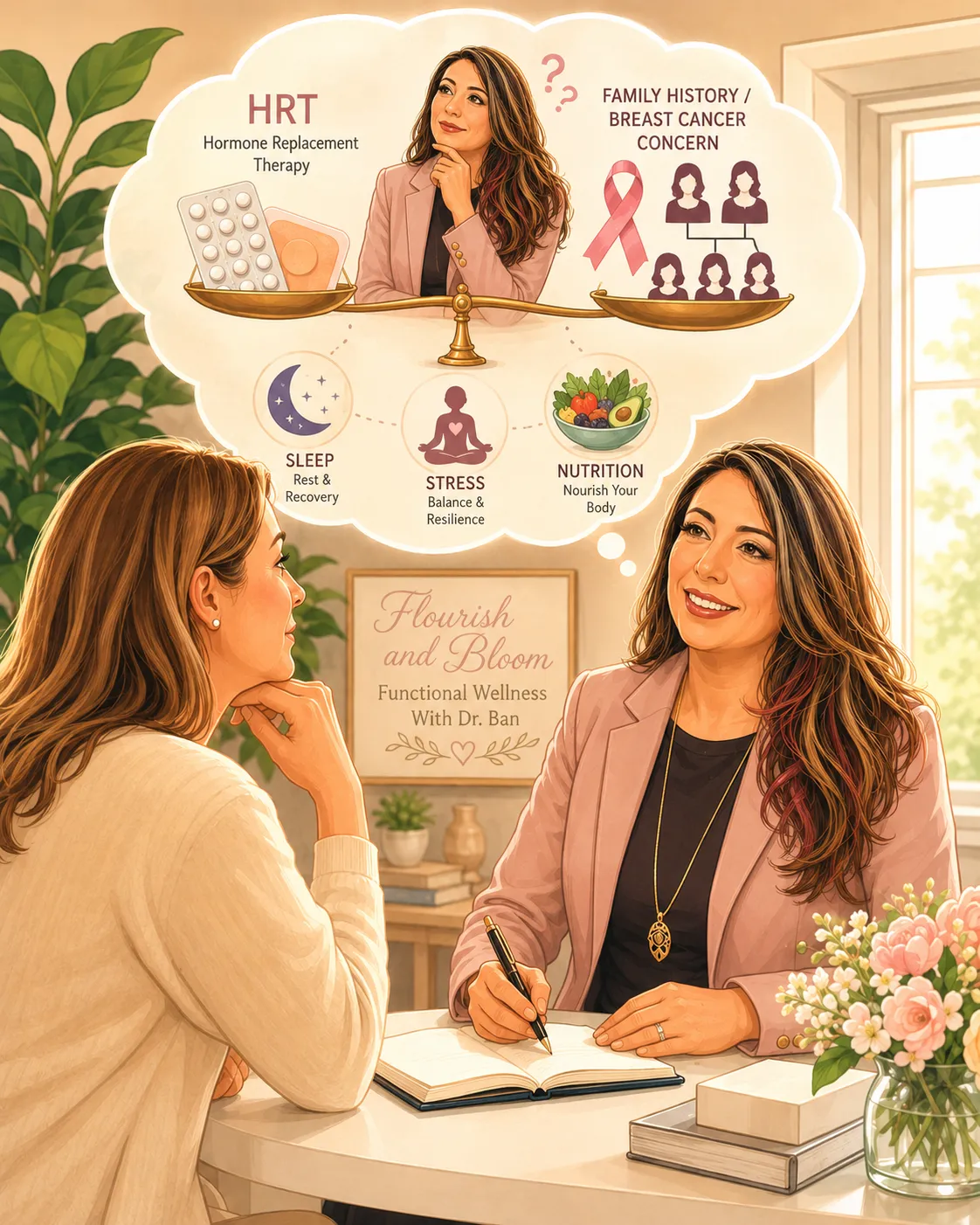
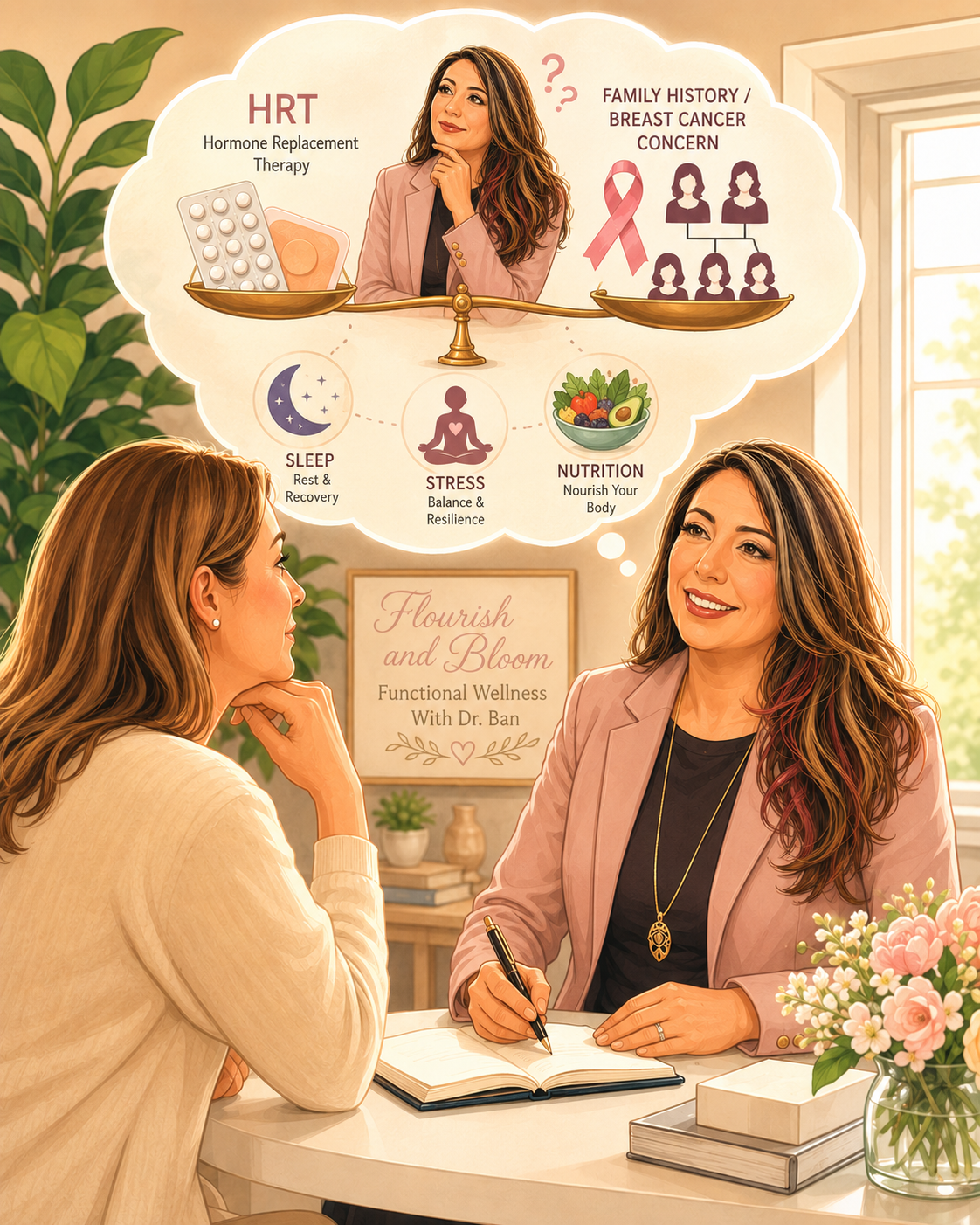
Add the phrase “hormone replacement therapy” and suddenly the room gets very quiet. You can almost hear every woman’s brain whispering, “Is this safe? Am I feeding cancer? Should I suffer through hot flashes and insomnia forever? Is my body trying to ruin my life like a toxic ex?”
Let’s take a breath.
Hormone replacement therapy, also called menopausal hormone therapy, is not a simple yes-or-no topic. It is not “HRT is dangerous” and it is not “HRT is magic fairy dust.” It is more like a Taylor Swift album: there are eras, layers, context, and if you only listen to one lyric out of context, you may misunderstand the whole story.
So let’s talk about HRT and breast cancer risk in real-life language, especially for women with a family history of breast cancer.
First: What is the general breast cancer risk with HRT?
In the general population, the breast cancer risk from HRT depends on the type of hormones used, how long they are used, the woman’s age, her baseline risk, and whether she has a uterus.
That last part matters.
Women who still have a uterus usually need estrogen plus a progesterone or progestogen to protect the uterine lining. Women who have had a hysterectomy may be able to use estrogen alone.
These are not the same when it comes to breast cancer risk.
The largest and most famous data set we often discuss is the Women’s Health Initiative. In that study, combined estrogen plus a synthetic progestin was associated with a small increased risk of breast cancer. Estrogen alone, in women who had a hysterectomy, did not show the same increased risk and in some follow-up data was associated with lower breast cancer incidence.
Translation: the risk conversation is not “hormones bad.” It is “which hormone, for whom, at what dose, by what route, for how long, and what is her starting risk?”
Medicine is annoying that way. It refuses to be a bumper sticker.
Absolute risk versus relative risk: the math nobody puts in Instagram captions
This is where many women get scared unnecessarily.
You may hear something like, “HRT increases breast cancer risk by 20% to 30%.” That sounds huge. But relative risk and absolute risk are not the same thing.
If a woman’s baseline risk over a certain period is low, a relative increase may still translate into a small absolute increase.
For example, imagine a woman’s risk of breast cancer over a certain time period is 3%. If something increases that risk by 25%, her risk does not become 28%. It becomes about 3.75%.
That is still important. But it is very different emotionally and medically.
This is why I tell patients: we do not make decisions based on fear math. We make decisions based on actual math.
What if you have a family history of breast cancer?
A family history of breast cancer can raise your baseline risk. But not every family history carries the same meaning.
One grandmother diagnosed at 78 is not the same risk pattern as a mother diagnosed at 42, a sister with triple-negative breast cancer, multiple relatives with breast or ovarian cancer, male breast cancer in the family, pancreatic cancer, metastatic prostate cancer, or Ashkenazi Jewish ancestry.
Family history is not one bucket. It is a whole filing cabinet.
Here is the important nuance: having a family history may increase your starting risk, but current evidence does not clearly show that HRT and family history multiply each other in a dramatic “double trouble” way. In other words, HRT does not necessarily become automatically forbidden just because your aunt had breast cancer.
But the decision should be more individualized.
If your baseline risk is higher, even a small HRT-related increase may matter more. That does not mean “never.” It means “calculate, personalize, and monitor.”
The goal is not to throw HRT at every symptom like confetti. The goal is to decide whether the benefits outweigh the risks for you.
How is breast cancer risk calculated?
Breast cancer risk is usually estimated using risk assessment models. These tools are not crystal balls. They are educated calculators.
Some commonly used models include:
The Gail model, also known as the NCI Breast Cancer Risk Assessment Tool. It looks at factors like age, reproductive history, prior breast biopsies, atypical cells, and breast cancer in first-degree relatives such as a mother, sister, or daughter.
The Tyrer-Cuzick model, also called IBIS. This one is often more detailed. It may include more extensive family history, hormonal factors, body mass index, breast density, and other variables.
BOADICEA or CanRisk. This model can incorporate family history, genetic testing results, breast density, and other risk factors. It is often useful when hereditary risk is a bigger concern.
BRCAPRO. This is more focused on estimating the chance that a person carries a BRCA mutation based on family history patterns.
A good risk assessment asks questions like:
How old were your relatives when they were diagnosed?
Was it breast cancer in one breast or both?
Was there ovarian, pancreatic, or aggressive prostate cancer in the family?
Was there male breast cancer?
Do you have dense breasts?
Have you ever had a breast biopsy?
Did the biopsy show atypia or LCIS?
When did you start periods?
When did you have your first full-term pregnancy, if any?
Have you used hormones before?
What is your current age and menopausal status?
This is why “my mom had breast cancer” is the beginning of the conversation, not the end.
Where does BRCA testing fit in?
BRCA1 and BRCA2 are genes involved in DNA repair. When someone carries a harmful mutation in one of these genes, their risk of breast and ovarian cancer can be significantly higher.
Testing can be very helpful when the family history suggests hereditary cancer risk. It can guide screening, prevention options, decisions about breast MRI, timing of mammograms, risk-reducing medications, and in some cases preventive surgery.
It can also help family members understand their own risk.
But here is the part we have to say clearly: a negative BRCA test does not always mean “no hereditary risk.”
BRCA is important, but BRCA is not the whole cast. It is not even the whole album. There are other genes linked with breast cancer risk, including PALB2, CHEK2, ATM, TP53, PTEN, CDH1, STK11, and others.
Some genetic panels test for many of these. Some older tests only checked BRCA1 and BRCA2. Some tests only checked for specific known family mutations. Some results come back as a “variant of uncertain significance,” which is basically genetics saying, “We found a typo, but we do not yet know if it changes the meaning of the sentence.”
Very reassuring. Thank you, science.
This is why genetic counseling matters. The test is only as useful as the interpretation.
Gene testing is powerful, but it does not know everything
This is one of the most honest things we can say in medicine: we do not have all the answers yet.
A woman can have a strong family history and negative genetic testing.
That does not mean she imagined the risk.
It may mean there are genes we do not know yet, gene combinations we do not fully understand, environmental influences, lifestyle factors, shared family patterns, epigenetics, or plain old statistical bad luck.
Medicine has come a long way, but it is not omniscient. We are still learning how genes, hormones, metabolism, inflammation, breast density, alcohol, insulin resistance, stress biology, environmental exposures, and aging interact.
The human body is not a toaster. You cannot just replace one part and know exactly what will happen.
So should women with a family history avoid HRT?
Not automatically.
A woman with a mild family history, severe menopause symptoms, low calculated breast cancer risk, normal screening, and no personal history of breast cancer may still be a reasonable candidate for HRT after shared decision-making.
A woman with a strong family history, dense breasts, prior atypical biopsy, high lifetime risk score, or a known pathogenic mutation may need a more cautious and specialized plan.
That plan may include nonhormonal options, lower doses, transdermal estrogen when appropriate, careful progesterone selection, shorter duration, enhanced breast screening, lifestyle intervention, and coordination with a breast specialist or genetic counselor.
HRT should not be prescribed like a drive-through order.
It should be tailored.
This is couture medicine, not fast fashion.
What are the benefits of HRT?
This part matters because menopause symptoms are not imaginary, and women should not be told to “just deal with it” while silently falling apart.
HRT can be very effective for:
Hot flashes
Night sweats
Sleep disruption
Vaginal dryness and painful intercourse
Recurrent urinary symptoms related to menopause
Mood changes in some women
Bone protection
Quality of life
For some women, HRT is the difference between functioning and barely surviving. Sleep deprivation alone can affect mood, metabolism, blood pressure, insulin resistance, weight, relationships, productivity, and joy.
So yes, risk matters.
But suffering also matters.
Women deserve a nuanced conversation, not a fear-based lecture.
Where can functional medicine help?
Functional medicine can be very helpful when it is used responsibly.
Let me be very clear: functional medicine should not replace mammograms, breast MRI when indicated, genetic counseling, oncology guidance, or evidence-based medical care.
But it can add a valuable layer.
Functional medicine asks: what is the terrain of this body? What modifiable risks can we improve? How can we support hormone metabolism, reduce inflammation, improve insulin sensitivity, optimize detoxification pathways, strengthen the gut, improve sleep, and reduce exposures that may contribute to hormonal disruption?
For women with a family history of breast cancer, this may include:
Improving insulin resistance and blood sugar balance
Supporting a healthy body composition, especially after menopause
Reducing alcohol intake, because alcohol is a known breast cancer risk factor
Prioritizing strength training and regular movement
Eating a fiber-rich, plant-forward, protein-sufficient diet
Supporting gut health and regular bowel movements
Addressing sleep quality and circadian rhythm
Reducing chronic stress load where possible
Checking vitamin D status when appropriate
Reviewing medications, supplements, and hormone exposures carefully
Reducing endocrine-disrupting chemical exposure when practical
Supporting liver detoxification through nutrition, not extreme cleanses
This is not about blaming women for cancer. Absolutely not.
It is about giving women agency where agency exists.
You cannot control your genes. You cannot control every exposure you have ever had. You cannot control whether your family tree came with a plot twist.
But you can often influence your metabolic health, inflammatory load, alcohol intake, movement, sleep, and screening plan.
That matters.
Functional medicine and HRT: the better conversation
A thoughtful approach might look like this:
First, we calculate breast cancer risk.
Then, we clarify the family history.
Then, we decide whether genetic counseling or testing is appropriate.
Then, we make sure breast screening is current.
Then, we evaluate the severity of menopausal symptoms and the woman’s goals.
Then, we review HRT options and nonhormonal options.
Then, we build a lifestyle and metabolic plan that supports long-term health.
That is a real plan.
Not “Here’s estrogen, good luck.”
Not “Your aunt had breast cancer, so enjoy your hot flashes forever.”
Something better.
What about vaginal estrogen if you have a family history of breast cancer?
This is one of the most common questions I hear, and fortunately the answer is often reassuring.
Low-dose vaginal estrogen is different from systemic hormone therapy. Unlike oral estrogen or estrogen patches that circulate throughout the body, low-dose vaginal estrogen is designed to work primarily in the vaginal and urinary tissues, with minimal systemic absorption.
For women with a family history of breast cancer—but no personal history of breast cancer—low-dose vaginal estrogen is generally considered a reasonable option when symptoms such as vaginal dryness, painful intercourse, recurrent urinary tract infections, urinary urgency, or bladder irritation are affecting quality of life.
In fact, many menopause experts consider vaginal estrogen one of the safest and most effective treatments for genitourinary syndrome of menopause because it delivers relief where it is needed most without significantly increasing circulating estrogen levels.
Women with a personal history of breast cancer, especially those taking aromatase inhibitors, should discuss vaginal estrogen with their oncologist and menopause specialist before starting treatment. But having a family history alone does not automatically mean vaginal estrogen is off the table.
Once again, the goal is not fear-based medicine. It is individualized medicine. Women should not have to choose between protecting their health and living with chronic discomfort when evidence-based options are available.
What about vaginal estrogen if you have a family history of breast cancer?
This is one of the most common questions I hear, and fortunately the answer is often reassuring.
Low-dose vaginal estrogen is different from systemic hormone therapy. Unlike oral estrogen or estrogen patches that circulate throughout the body, low-dose vaginal estrogen is designed to work primarily in the vaginal and urinary tissues, with minimal systemic absorption.
For women with a family history of breast cancer but no personal history of breast cancer—low-dose vaginal estrogen is generally considered a reasonable option when symptoms such as vaginal dryness, painful intercourse, recurrent urinary tract infections, urinary urgency, or bladder irritation are affecting quality of life.
In fact, many menopause experts consider vaginal estrogen one of the safest and most effective treatments for genitourinary syndrome of menopause because it delivers relief where it is needed most without significantly increasing circulating estrogen levels.
Women with a personal history of breast cancer, especially those taking aromatase inhibitors, should discuss vaginal estrogen with their oncologist and menopause specialist before starting treatment. But having a family history alone does not automatically mean vaginal estrogen is off the table.
Once again, the goal is not fear-based medicine. It is individualized medicine. Women should not have to choose between protecting their health and living with chronic discomfort when evidence-based options are available.
The Taylor Swift Version
Think of your breast cancer risk like a Taylor Swift album: you cannot judge the whole story by one track.
Your genetics may be one song.
Your family history is another.
Your hormones, breast density, alcohol intake, sleep, stress, metabolism, and screening plan are all part of the album too.
HRT is not automatically the villain in the story. For some women, it is the bridge that finally makes life feel manageable again. For others, it may not belong on the playlist, or it may need to be used very carefully with the right screening and follow-up.
The point is not to cancel the whole album because one lyric sounds scary.
The point is to understand the full story before deciding what belongs in your treatment plan.
The bottom line
If you have a family history of breast cancer and you are considering HRT, you do not need panic. You need personalization.
Ask for a real risk assessment.
Ask whether genetic counseling makes sense.
Ask what type of HRT is being recommended and why.
Ask whether nonhormonal options should be considered.
Ask how your breast screening should be adjusted.
Ask what lifestyle and functional medicine strategies can reduce modifiable risk.
And most importantly, ask for a clinician who can hold nuance without making you feel ridiculous for wanting relief.
Because menopause is not a character flaw.
Family history is not destiny.
HRT is not automatically dangerous or automatically safe.
And women deserve better than fear, confusion, and one-size-fits-all medicine.
They deserve answers, context, and a plan that respects both their risk and their quality of life.
Want a more personalized plan?
If this topic made you think, “Wait… I need someone to help me make sense of my hormones, my family history, my symptoms, and my actual risk,” that is exactly why I created my online program.
Inside my program, we take the confusion out of perimenopause, menopause, hormones, metabolism, inflammation, lifestyle, and long-term prevention. We do not do fear-based medicine. We do not do one-size-fits-all advice. And we definitely do not tell women to just “drink more water and accept suffering as a personality trait.”
You deserve a plan that looks at the whole picture: your symptoms, your labs, your history, your family history, your goals, and your quality of life.
If you are ready for deeper support, you can:
Join my online program for step-by-step education and guidance.
Book a discovery call so we can see whether working together is the right fit.
Join my free community for women’s health education, hormone support, and practical lifestyle guidance.
Follow me on Facebook, Instagram, and YouTube for more honest, science-backed conversations about hormones, menopause, functional medicine, and women’s health.
Because you do not need more panic.
You need clarity, strategy, and a clinician who can help you understand your body without making you feel like your hormones came with a warning label and a fog machine.