Why I Added Functional Medicine to My Practice as an OB/GYN and Menopause Specialist
Why I Added Functional Medicine to My Toolbox (Yes, Even as an OB/GYN Who Already Had a Lot of Tools)
The Moment I Realized Something Was Missing
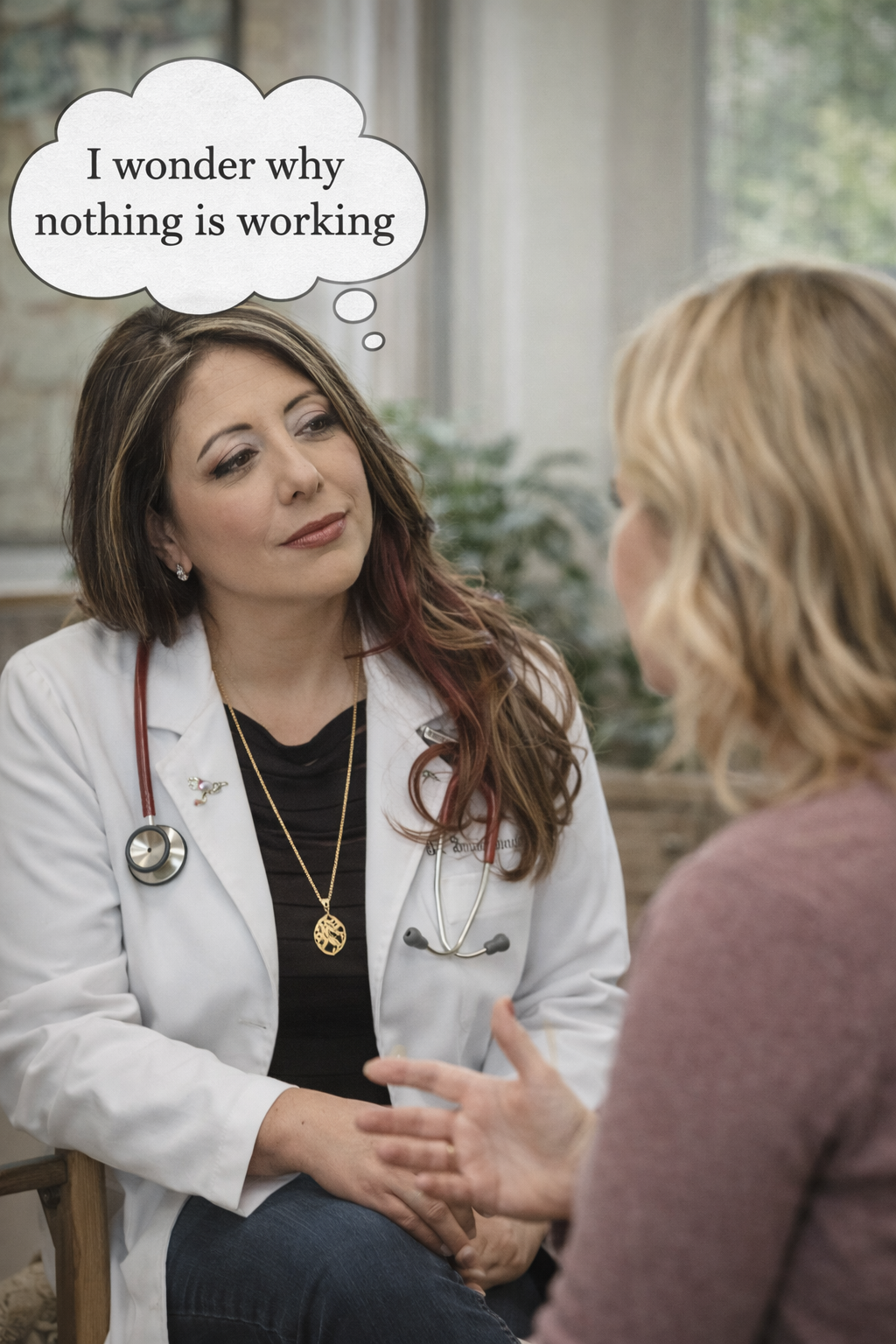
At some point in my career, I started having the same conversation over and over again:
Patient: “I’m exhausted, I can’t think straight, I’ve gained weight, my libido disappeared… but I was told everything is normal.”
Me (internally): Ah yes, the wildly popular diagnosis of “normal but miserable.”As an OB/GYN, menopause specialist, and clinical sexologist, I had excellent training. I knew the guidelines. I prescribed hormone therapy appropriately. I could explain estrogen pathways in my sleep (which, ironically, many of my patients could not do).
And yet… some patients didn’t get better.
Not a little better. Not partially better. Just… still stuck.
That’s when I realized:
👉 The problem wasn’t that medicine wasn’t working.
👉 The problem was that it wasn’t always asking enough questions.What Functional Medicine Offered (Besides Longer Appointments and Realizing It’s Never Just One Thing)
Functional medicine essentially asks:
“Why is this happening to this person, right now?”
Which sounds obvious—until you realize how often medicine is structured around:
“What’s the diagnosis, and what’s the standard treatment?”
Functional medicine zooms out and says:
Hormones don’t exist in isolation
The brain, gut, metabolism, and stress systems are in constant conversation
And sometimes… they’re arguing
This is especially relevant in menopause, where:
Estrogen declines
Sleep changes
Metabolism shifts
And suddenly your body is behaving like a startup with no management
Where It Actually Helped Me Clinically
Let’s be practical.
I didn’t wake up one day and abandon evidence-based medicine for green juice and vibes.
But I did start noticing patterns.
1. The “It’s Just Menopause” Trap
Sometimes it is menopause.
And sometimes it’s:
Insulin resistance
Thyroid dysfunction
Chronic sleep deprivation
Or stress levels that would make a trauma researcher pause
Adding a broader lens helped me stop blaming estrogen for everything. (Estrogen has enough PR problems.)
2. Low Libido (a.k.a. the most complex “simple” complaint in medicine)
If libido were just hormonal, my job would be very easy.
It’s not.
It’s:
Hormones
Nervous system regulation
Relationship dynamics
Mental load
And occasionally, the fact that someone hasn’t slept properly since 2012
Functional thinking helped connect those dots without pretending there’s a single magic solution.
(Spoiler: there isn’t. I checked.)
3. The “Normal Labs” Dilemma
Medicine loves normal ranges.
Patients… less so.
Because “normal” doesn’t always mean optimal, and it definitely doesn’t mean you feel good.
This is where functional medicine can be helpful—not by ignoring labs, but by interpreting them in context.
Let’s Talk About the Reputation Era
Functional medicine has… a reputation.
And like any good Reputation era moment, it depends on who you ask.
Some people hear it and think:
✨ Root causes, personalized care, whole-person medicineOthers hear it and think:
🤨 This feels… complicatedAnd honestly?
That tension exists for a reason.
Because functional medicine lives in an interesting space:
Some of it is strongly grounded in evidence (nutrition, sleep, lifestyle)
Some of it is still evolving
And some of it pushes us to ask questions we weren’t trained to ask
Which, as it turns out, is not a bad thing.
If anything, it forces a level of curiosity that medicine actually needs more of—not less.
So instead of seeing it as something to fully embrace or completely dismiss, I started seeing it differently:
Not as a replacement for medicine.
Not as a contradiction to it.But as something that—when used thoughtfully—can expand how we think.
Because at the end of the day, medicine evolves the same way everything else does:
Not by staying in its comfort zone,
but by being willing to question it.Why Insurance Doesn’t Cover This (Or: Why Your 60-Minute Visit Is a Rebel Act)
This is where things get… structural.
1. The System Is Built for Speed
Insurance loves:
10–15 minute visits
Clear diagnoses
Standard treatments
Functional medicine says:
“Let’s talk for an hour about your sleep, stress, diet, and life.”
Insurance says:
“We’re going to pretend we didn’t hear that.”
2. “Medical Necessity” Is Narrow
Insurance covers:
Diagnosed disease
It does not love:
“I feel terrible but don’t meet criteria for a diagnosis yet”
Which, inconveniently, describes a lot of menopause patients.
3. It’s Hard to Study Individualized Care
Insurance wants:
Large randomized trials
Standardized protocols
Functional medicine says:
“It depends.”
Science hears:
“That’s going to be complicated.”
So How Did Functional Medicine Training Change the Way I Practice?
It didn’t change the foundation of what I do.
It deepened it.
I’m still the same physician at my core:
I follow evidence-based guidelines
I prescribe hormone therapy when appropriate
I use treatments grounded in science
But the way I show up in my practice feels different now.
I notice more.
I connect more dots.
I think more about the whole person sitting in front of me—not just the diagnosis on the chart.And I don’t rush to call something “fine” when it clearly doesn’t feel that way to my patient.
This shift has been incredibly meaningful for me.
I genuinely love learning—probably more now than I did during training—and this has given me a way to keep growing, to stay curious, and to keep evolving in how I care for people.
And honestly, that’s my favorite part.
Being able to offer my patients not just what I was originally trained in, but everything I’ve continued to build on since.
Because for me, becoming a better doctor hasn’t been about changing direction.
It’s been about becoming more present, more thoughtful, and more complete in the way I practice.
The Bottom Line
Functional medicine didn’t replace what I do.
It filled in some blind spots.
Not perfectly. Not completely. And definitely not uncritically.
But enough to make a difference for patients who were tired of being told:
“Everything looks fine.”
When clearly… it wasn’t.
Final Thought (Because We Made It This Far)
If medicine had all the answers, blogs like this wouldn’t exist—and neither would half my patient conversations.
So if you’ve ever thought:
“Everyone says I’m fine… but I don’t feel fine”You’re exactly the kind of person I had in mind while writing this.
If you want to go deeper (without falling into a Google rabbit hole at 2am), you can:
✨ Explore how I work with patients
✨ Join my free community where we talk about all of this, honestly, and without jargonBecause navigating menopause, hormone health, and your overall wellbeing is complex…
…but getting the right support shouldn’t be.